Spotify’s Playlist Economy
A data story about how Spotify’s algorithm decides which artists get heard, told in two posters and a film.
Key findings
More music is uploaded each year, but listeners’ attention hasn’t grown with it.
of artists have fewer than 10 monthly listeners.
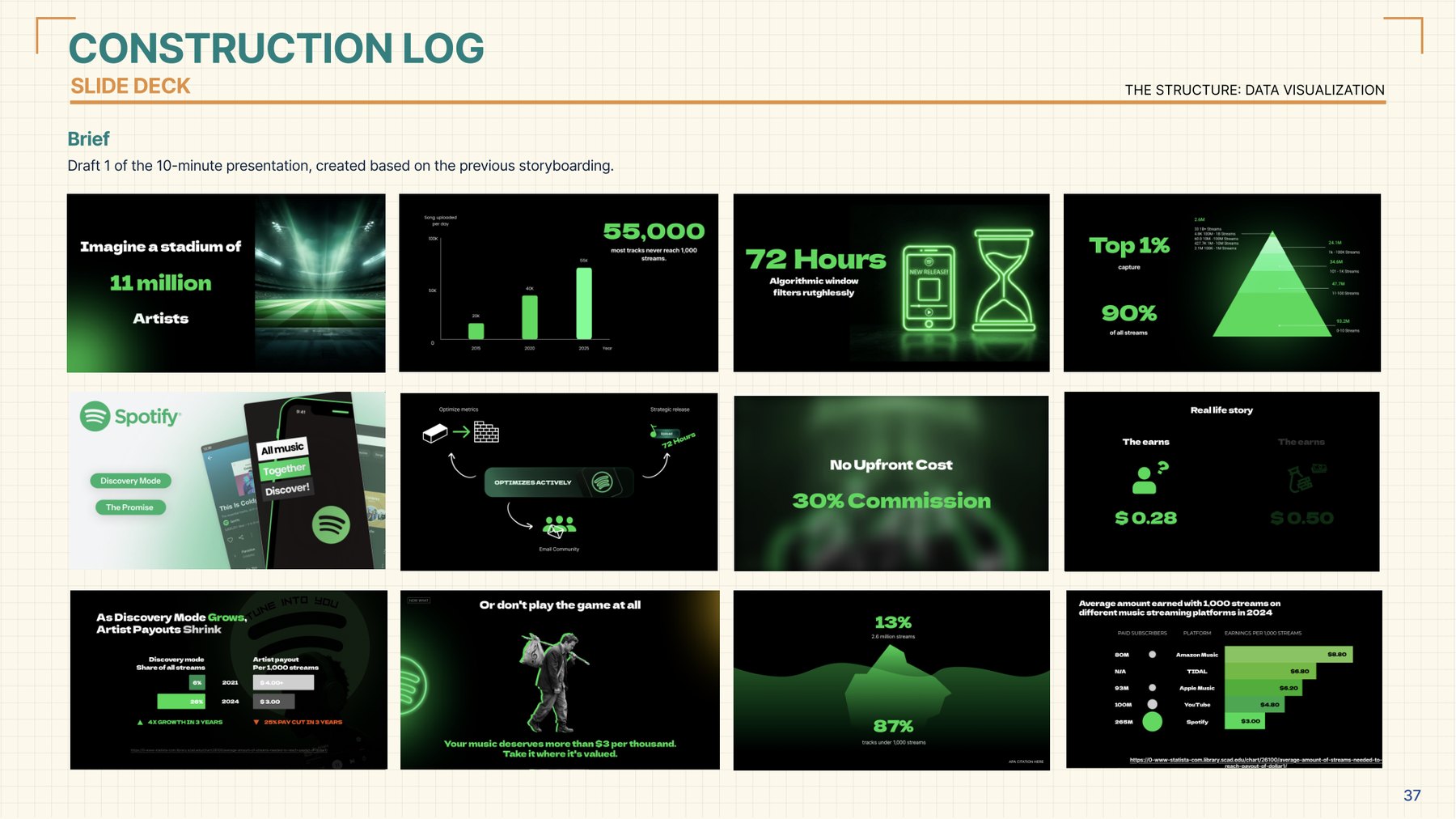
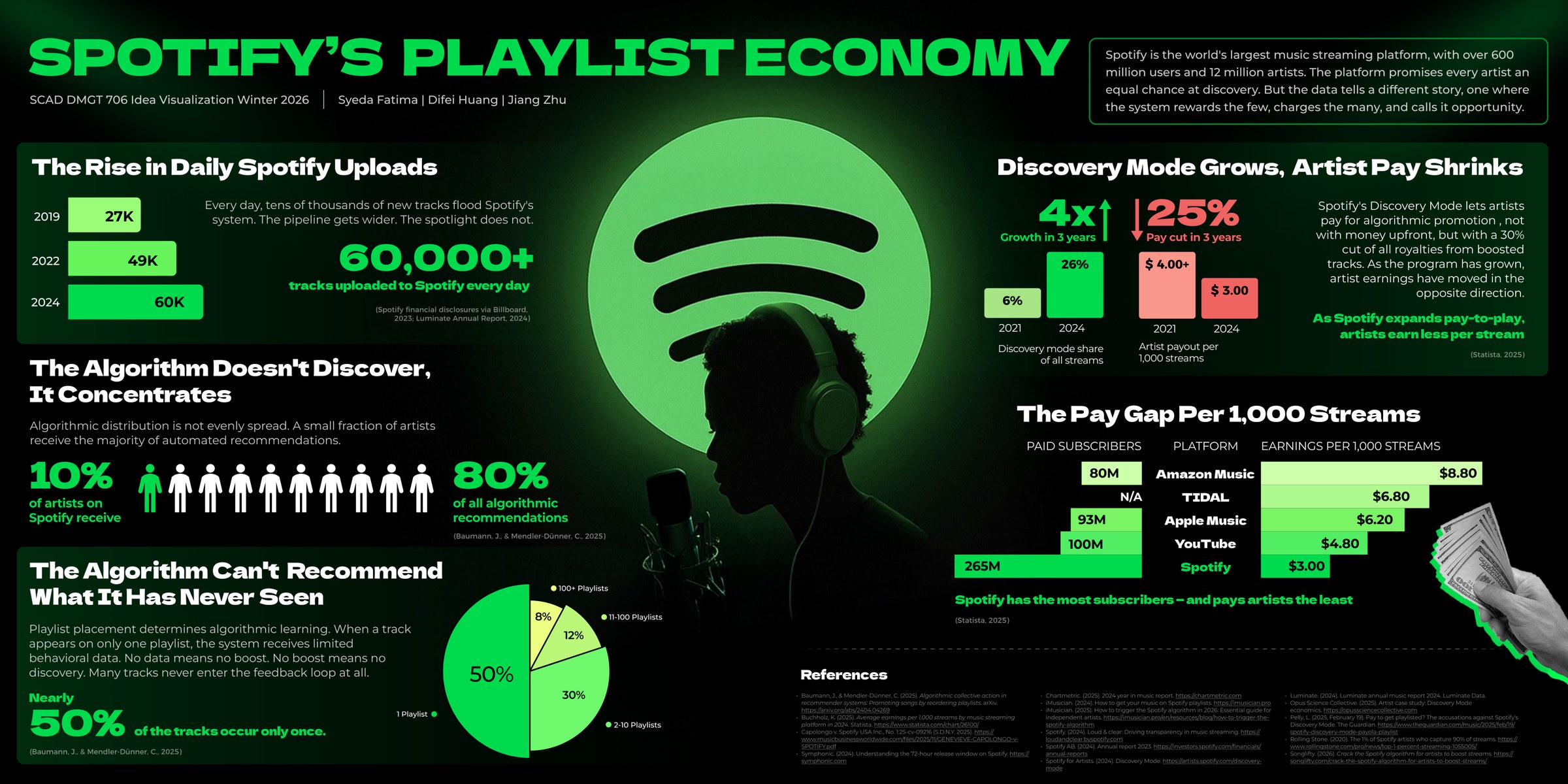
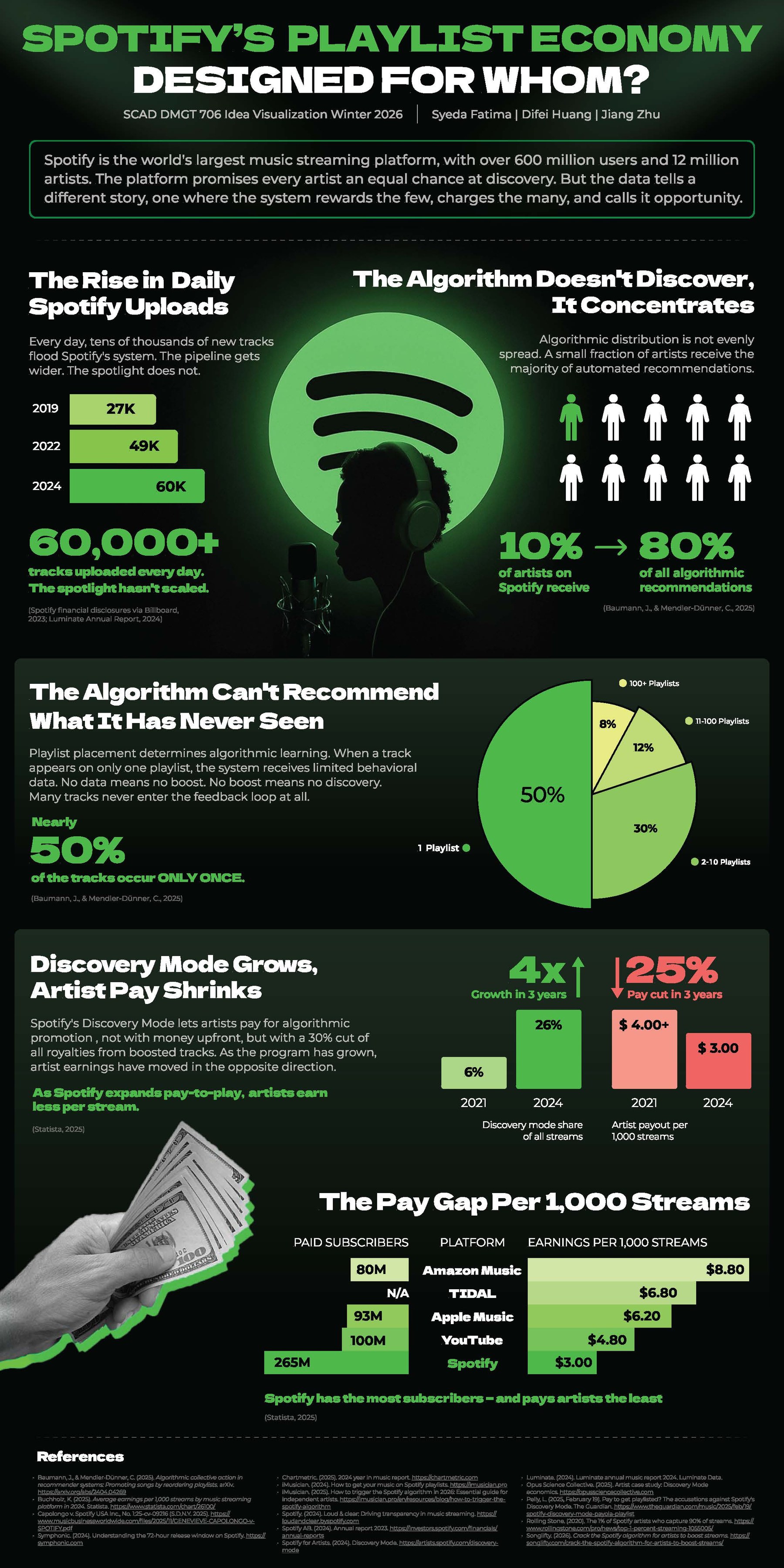
tracks were uploaded every day in 2024, up from 27,000 in 2019.
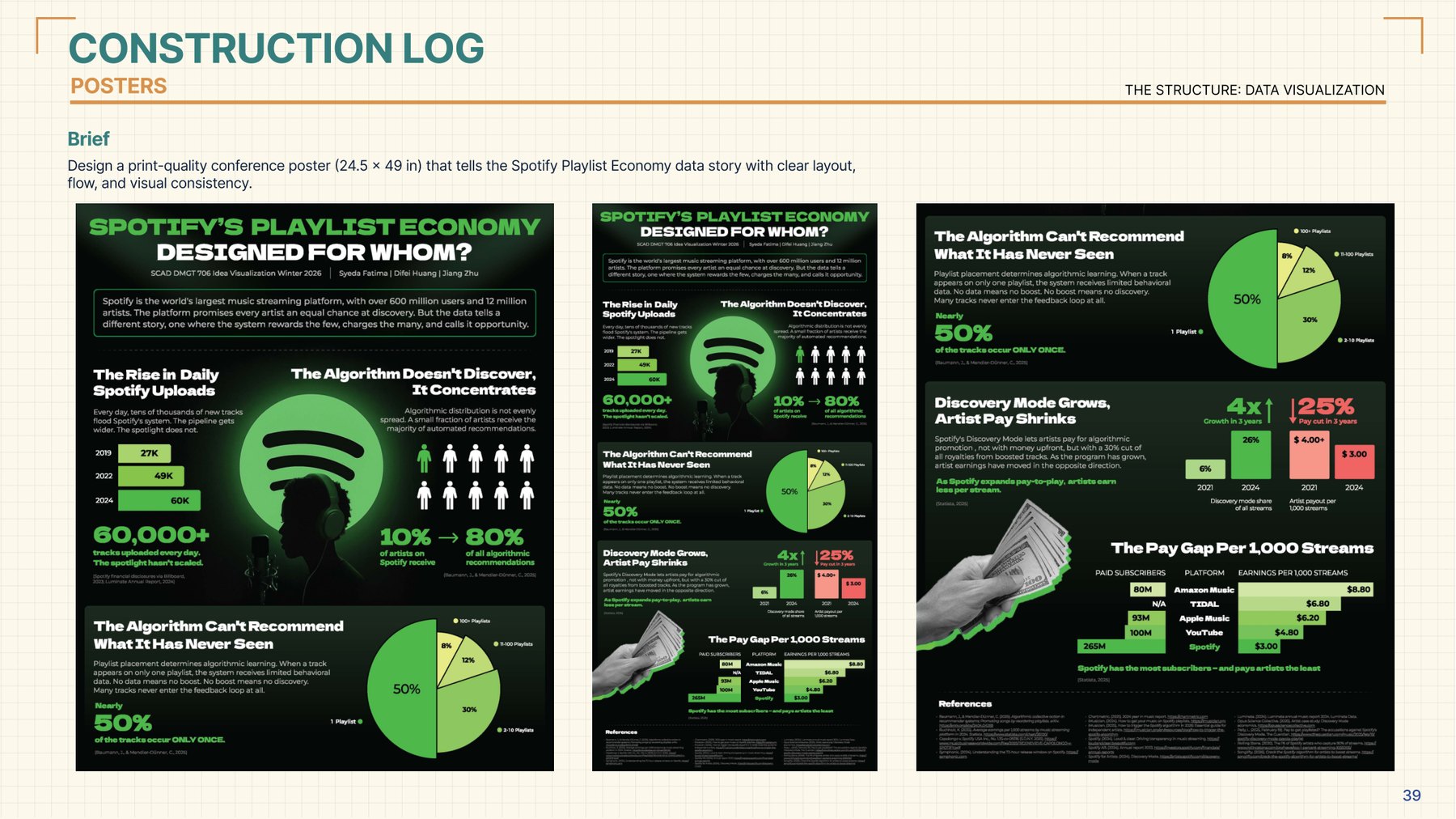
of artists receive 80% of all algorithmic recommendations.
of artists get 90% of all streams.
of tracks appear on only one playlist, which gives the algorithm too little data to recommend them.
is how long a new track has to gain listeners before the algorithm stops promoting it.
Figures come from the project’s research sources.
Spotify says anyone can be discovered. Is that what the data shows?
The algorithm favors a few artists, and most of the rest are rarely recommended.
I led the project from the research and analysis through to the posters, film and presentation.
The posters
Both posters present the same findings.
The film
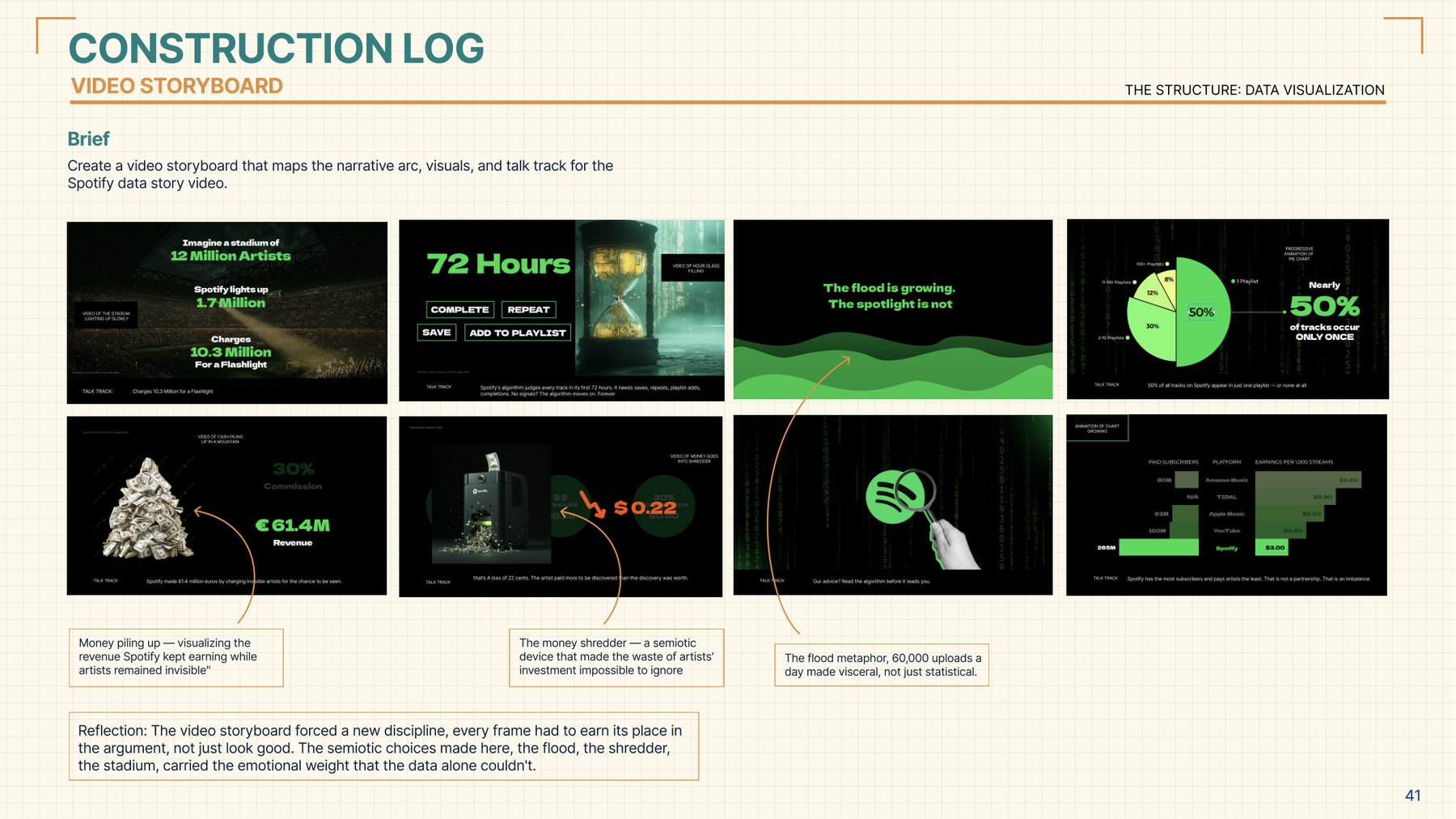
The film is 3 minutes 32 seconds long and covers the whole data story.
The film in three parts
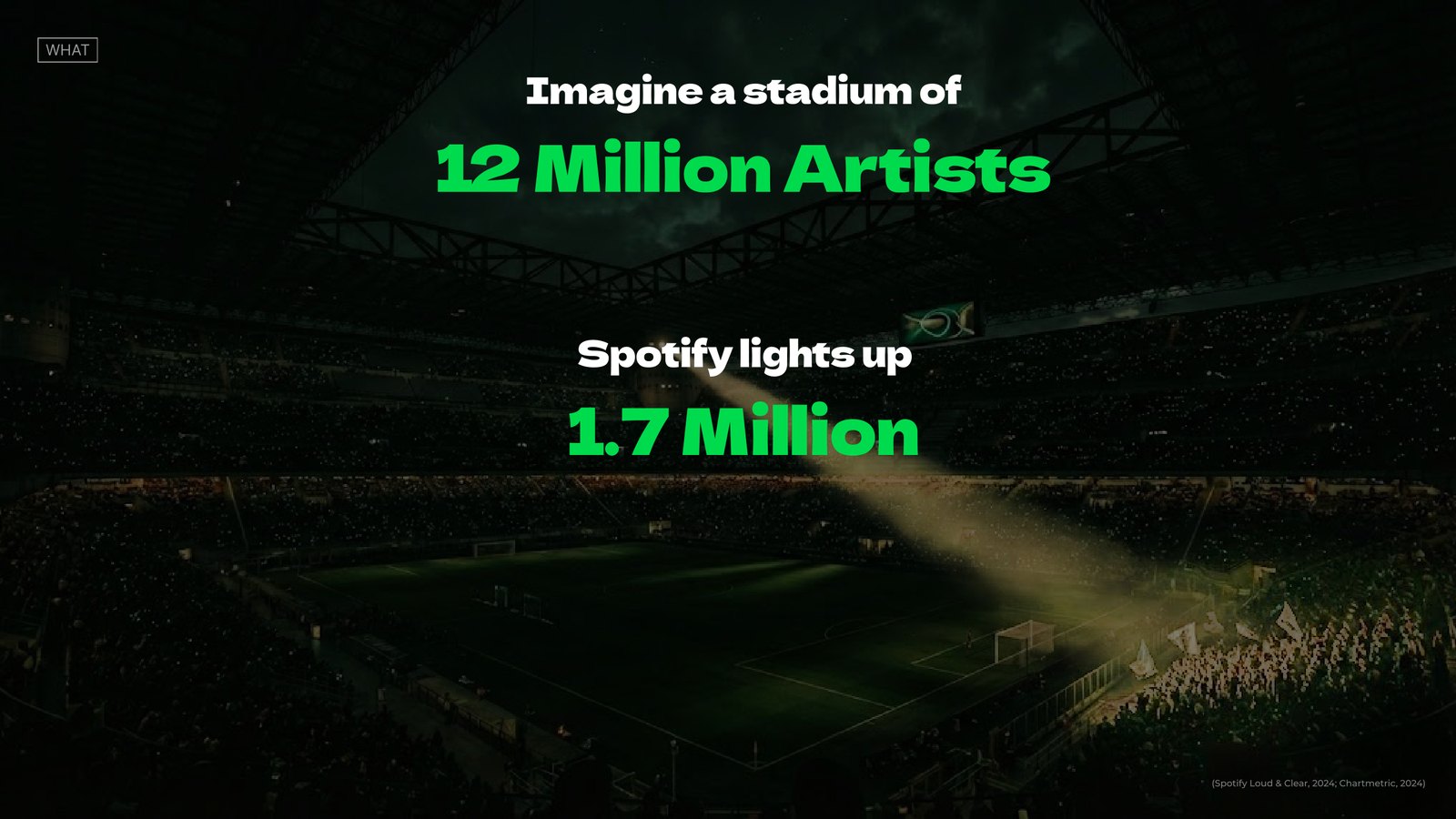
“Twelve million artists walk into a stadium. Spotify lights up 1.7 million of them. The rest stay in the dark.”
From the film’s script
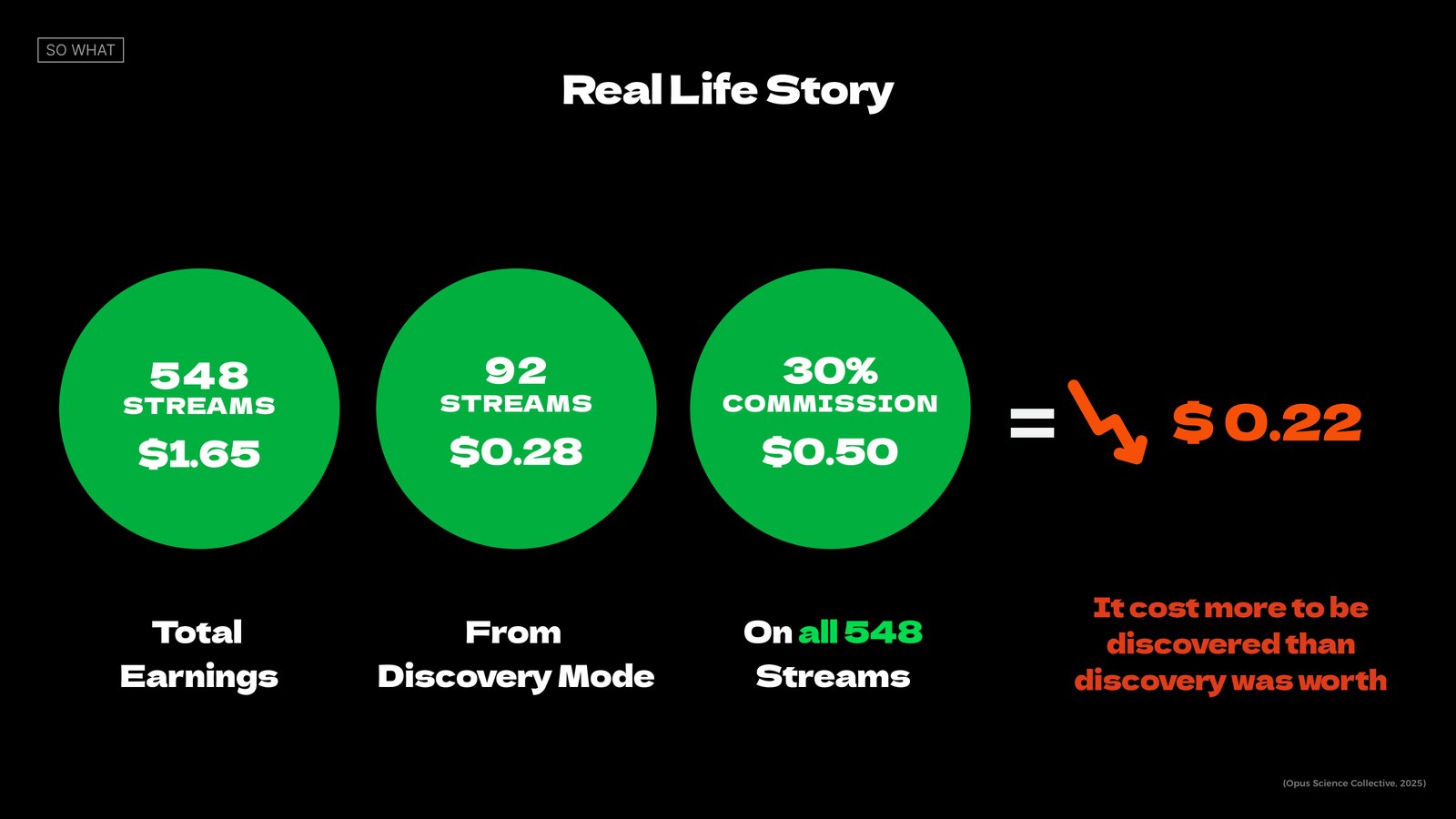
Spotify’s Discovery Mode gives artists more reach in exchange for a 30% commission. One artist earned $0.28 and was charged $0.50, a loss of $0.22.
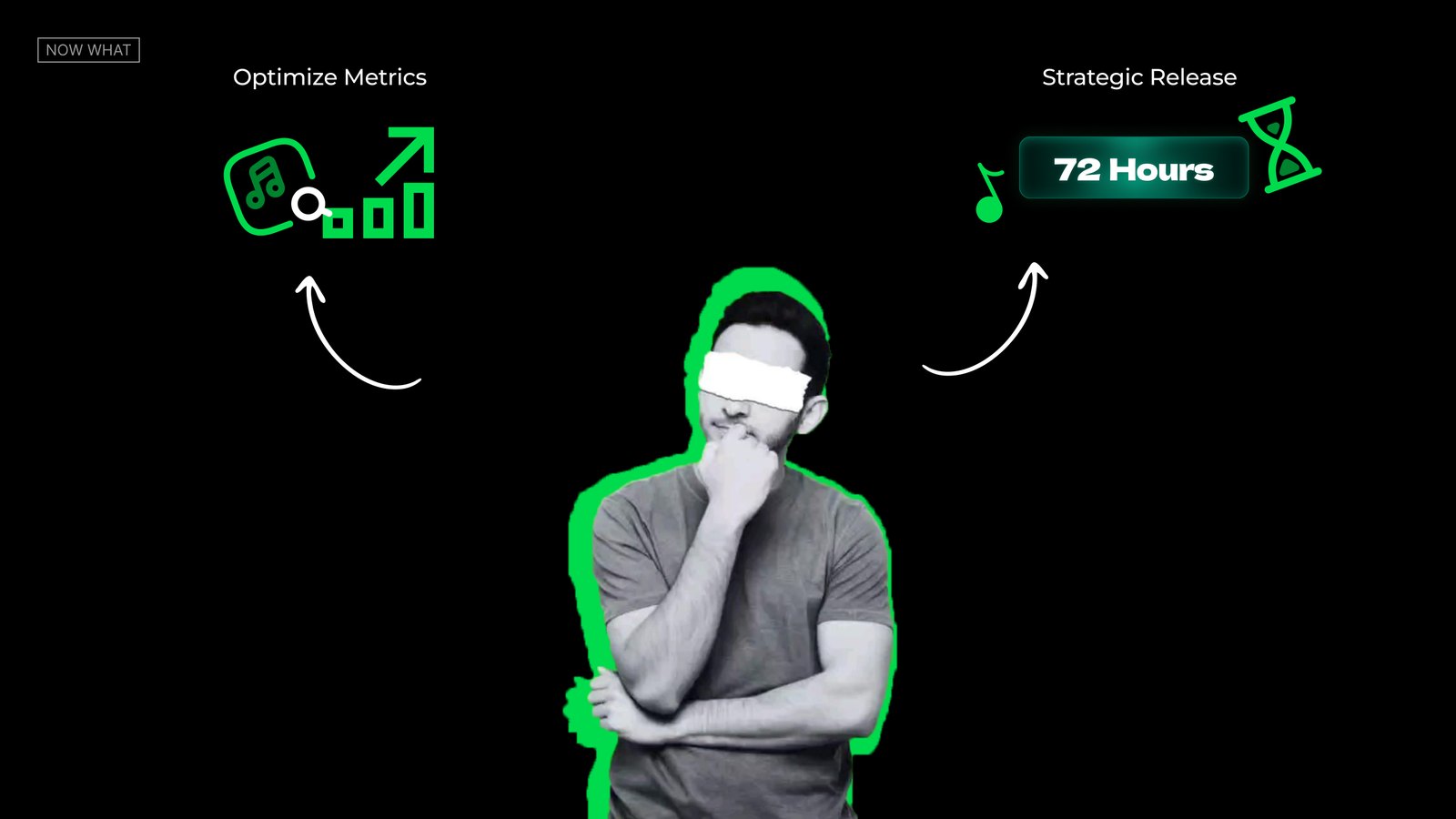
Artists can plan their releases and track their numbers carefully, or move their music to platforms that pay more per stream.
Artists pay for promotion and earn less
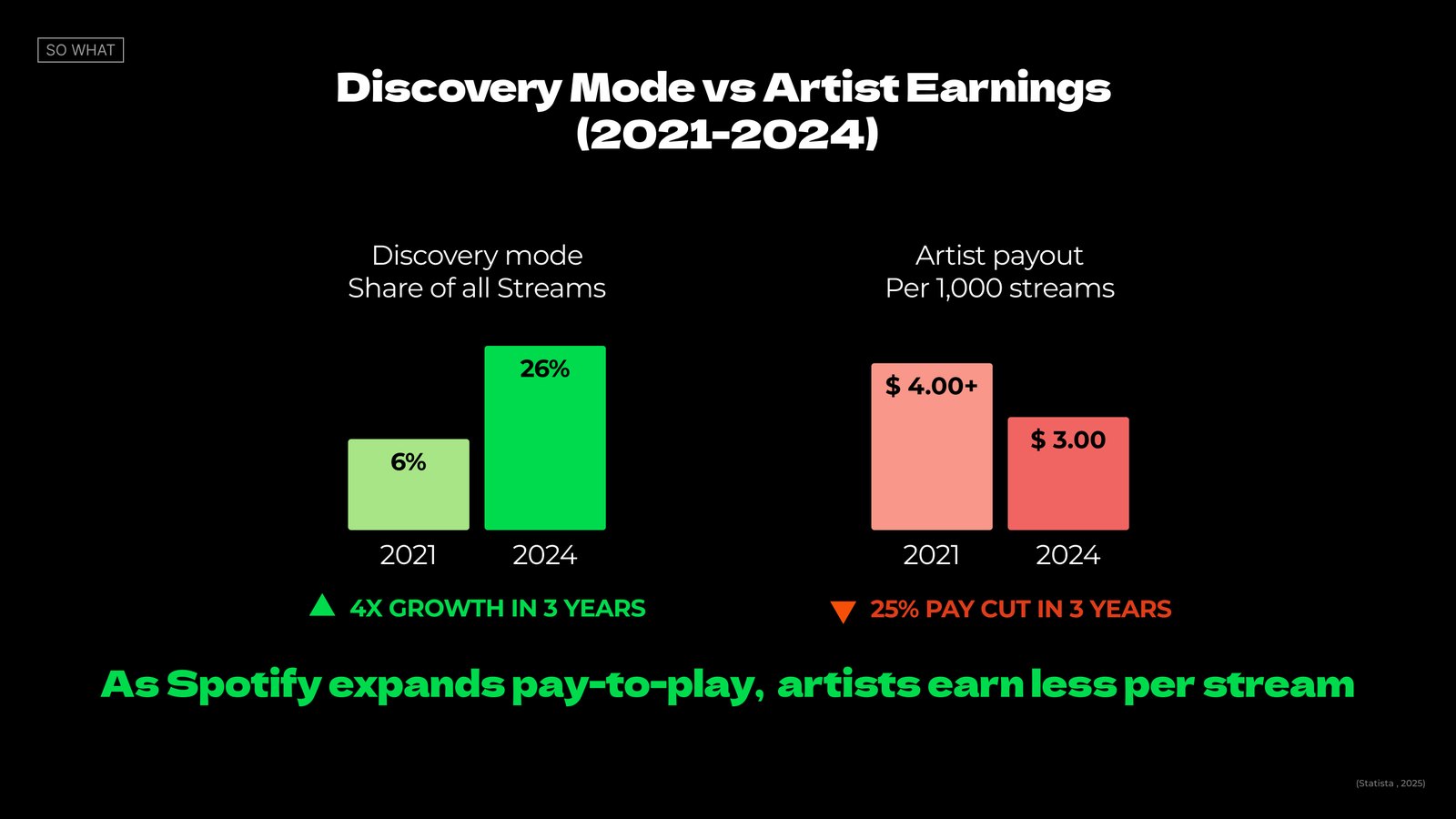
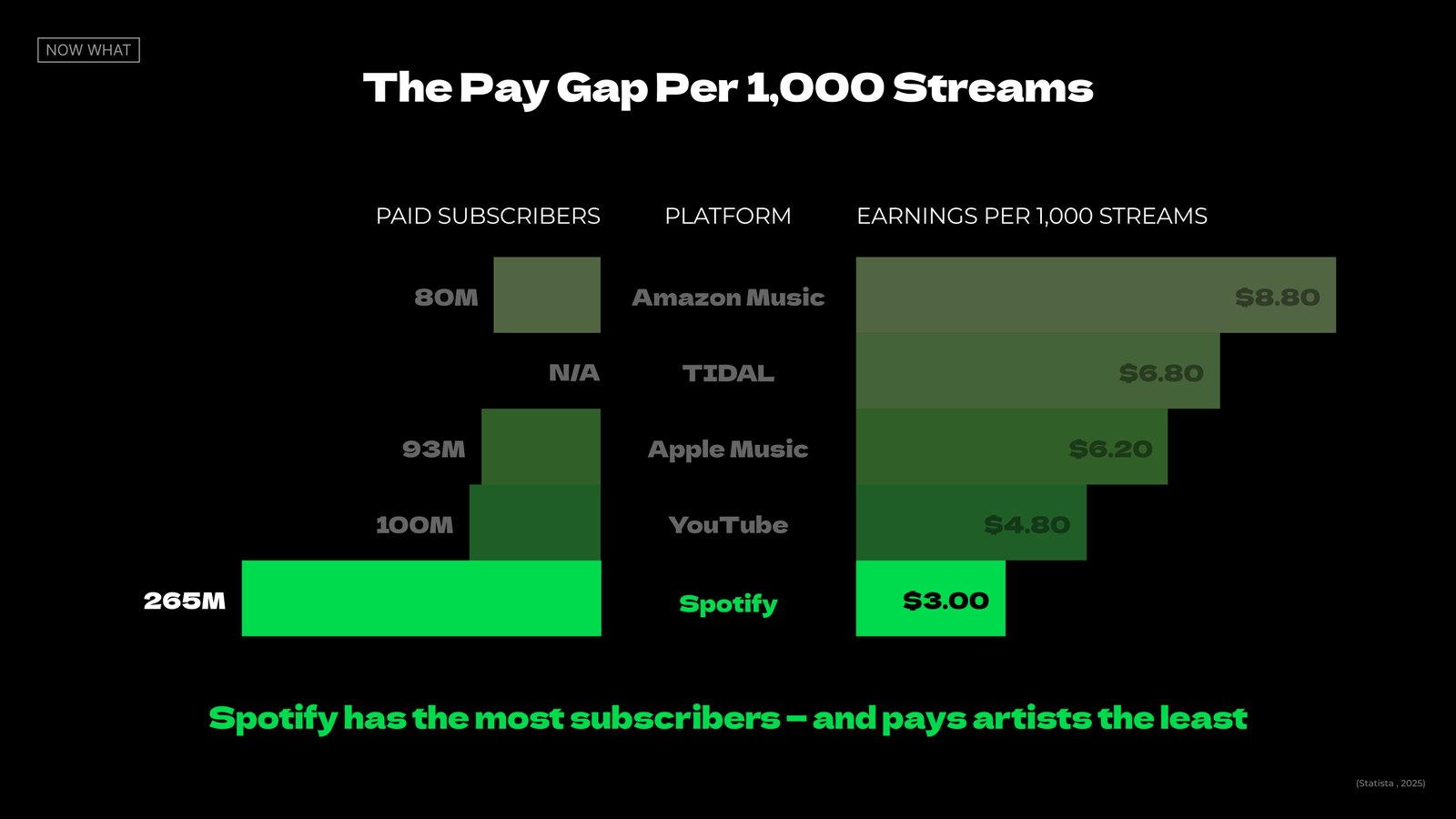
Between 2021 and 2024, Discovery Mode grew from 6% to 26% of streams. In the same years, artist pay fell from more than $4 to $3 per 1,000 streams, a drop of about 25%.
How I led the project
I led the team through three stages. These pages are from our process book.
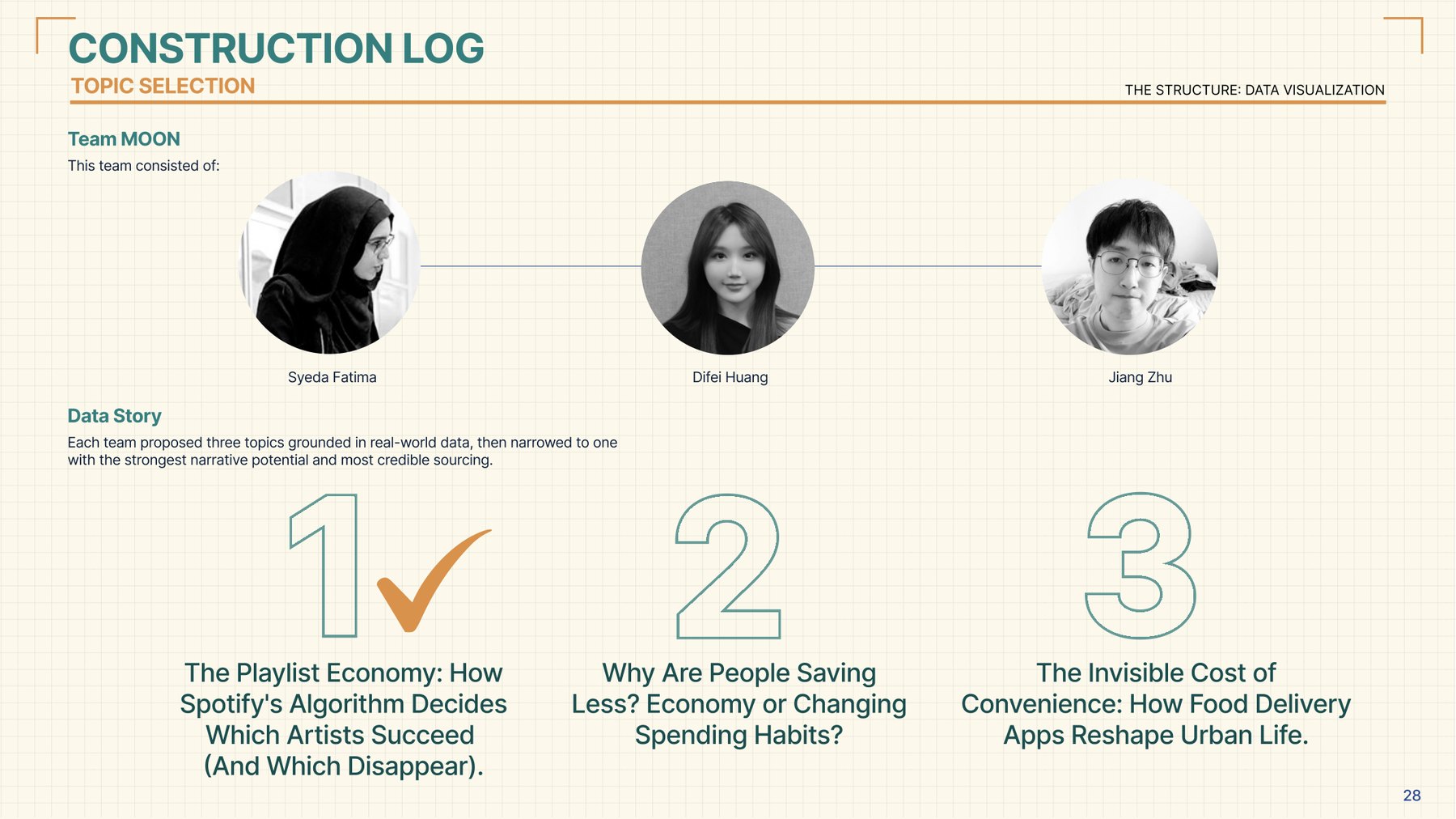
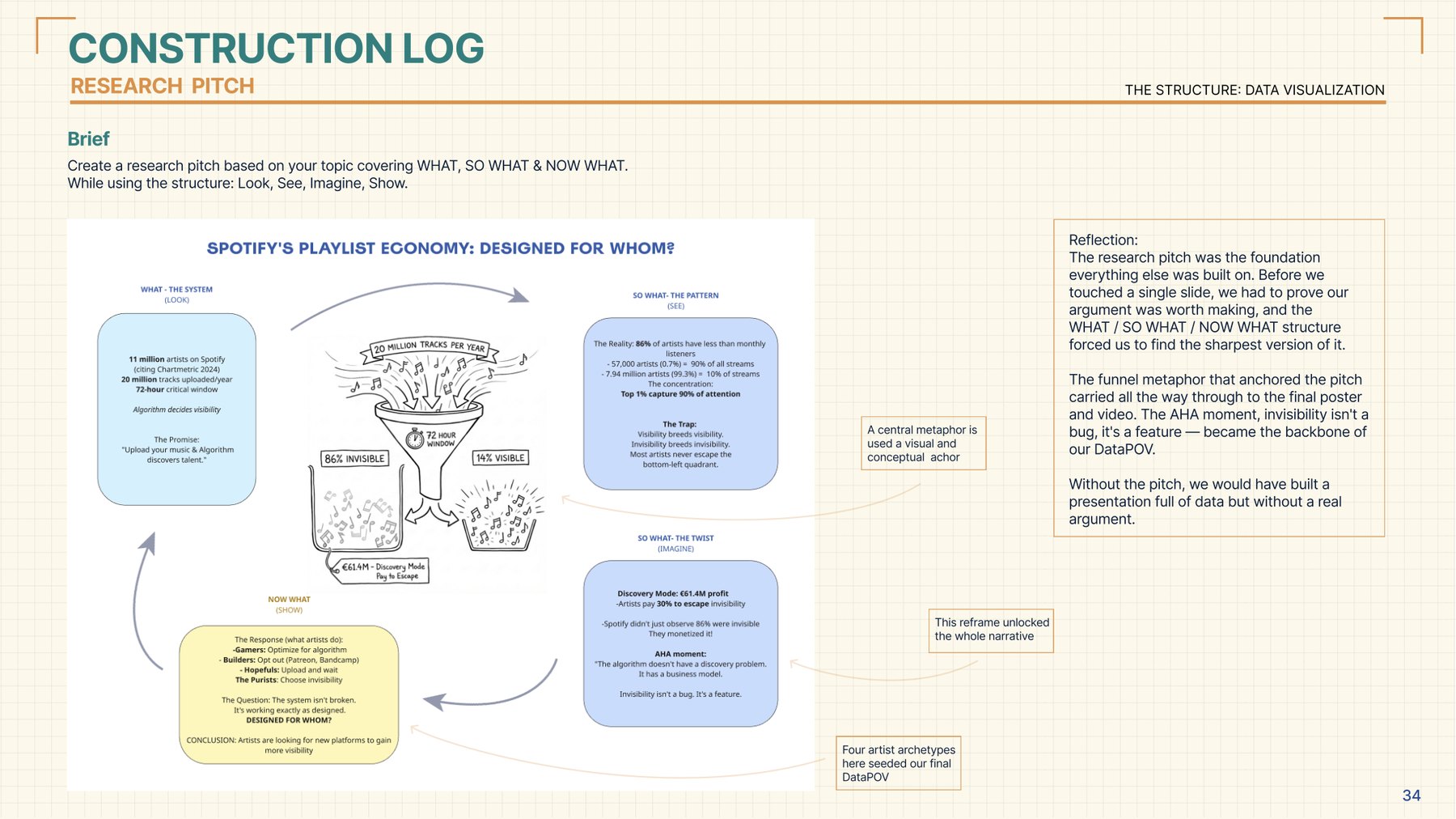
We chose a topic and wrote the pitch
Each of us proposed a topic, and we picked the one with the best sources. We built the pitch around three questions: what is happening, why it matters and what artists can do about it.
We planned everything with storyboards
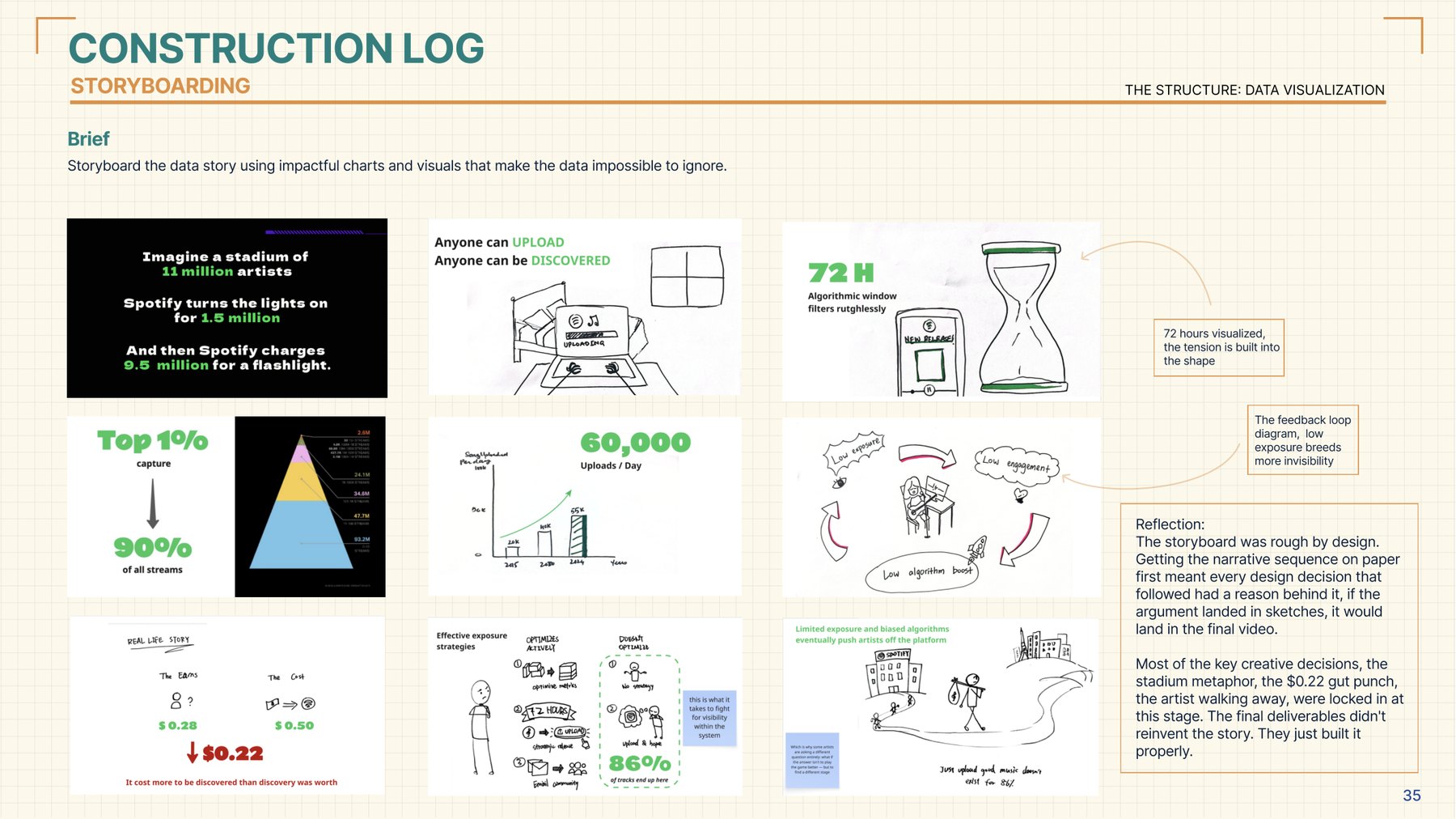
We made one storyboard for the presentation and one for the film, so we knew what each chart and scene needed to show before we designed anything.
We made the presentation, posters and film
We worked from the storyboards. The final presentation was 10 minutes long.